
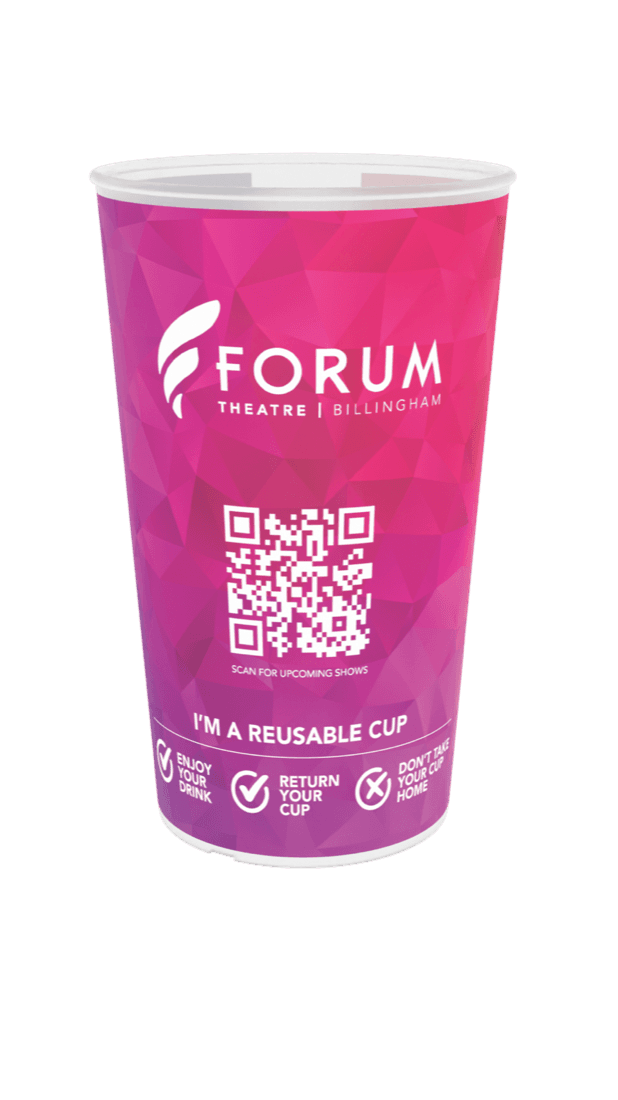

The middle layer is what costs you
Most reusable cups sold in the UK pass through at least one layer between the moulding machine and the customer. A reseller imports from overseas, or a UK printer buys blank cups, prints them and resells. Each layer adds margin, lead time and a phone tree between you and the people who actually run the production line. Buying direct from a manufacturer is structurally cheaper, faster and more transparent. None of that is a knock on the resellers, plenty are professional and well-run. It is just maths.
Pricing without padding
A reseller that imports a printed cup from Eastern Europe at, say, £0.45 will typically resell at £0.65 to £0.80 to keep a viable margin. Manufactured directly in the UK, the same cup at volume sits between £0.33 and £0.55 depending on print method and lead-time tier. The arithmetic favours direct supply by 20 to 40% for most order sizes we see, sometimes more on long runs where the broker margin compounds. We publish from-prices openly on every product page so you can see this without ringing for a quote.
Lead time control sits in the factory, not the sales office
When a reseller quotes a 10-working-day turnaround, the clock often does not start until they have placed the order with the factory. Production then queues behind whatever else is on the line. The reseller has no real-time view of the press schedule and cannot move you up the queue. When you order direct from a manufacturer, the schedule is the same people answering your email. We can promise a date because we own the press time.
- Eco Saver, 25 working days: our cheapest unit price. Production runs on the standard slot.
- Standard, 10 working days: the workhorse tier for most jobs.
- Stock dispatch, 5 working days: plain UKCA-marked stock from our UK warehouse for emergency top-ups.
Full breakdown on the delivery page.
Quality control happens in one place
A factory that controls moulding, printing, finishing and dispatch can run a single QC line. Polypropylene melt temperature, IML registration, UKCA fill-line tolerance, surface finish, packing density. All of it gets signed off in the same building by the same people. When a reseller buys blanks from one supplier and prints with another, the QC chain is broken twice: once at the blank inspection stage, once at the print sign-off. Defects that slip through each handover are common enough that big resellers price in a buffer return rate.
The people you speak to are the people on the floor
Pick up the phone to 01642 615757 and the person you speak to either runs the production schedule, works on the press, or sits 20 feet from someone who does. That matters when a brief changes. Want to swap colour 3 in the IML print on day two of production? With a reseller, that becomes a sequence of escalations through their account manager, then their factory rep, then the factory itself. With us, it is one conversation and a revised press schedule.
Provenance, in a sentence
Our cups are moulded, printed and dispatched from Stockton-on-Tees as part of Tees Valley Plastics. We have been making reusable cups in this building since 2012. The pellets that arrive at the goods-in dock leave the loading bay as branded cups. Nothing is rebranded, white-labelled or shipped in from elsewhere. Read more on our story and our sustainability approach.
How to test the difference
If you are evaluating quotes from a reseller and a manufacturer side by side, three questions usually settle it. Ask who is moulding the cup. Ask for a video walkthrough of the production line where it is being printed. Ask for the next available press slot for your spec. A direct manufacturer answers all three in writing. If a quote dodges any of them, you are paying for an extra link in the chain. Start a quote on the shop, or send us a brief by phone.